Audio Redaction for 911 Calls: How Manatee County Cut Review Time with CaseGuard AI
September 29, 2026 | 8 minutes read
Thirty Minutes of Audio Redaction for One 911 Call
Katrina checks the public records portal at Manatee County Emergency Communications most mornings. She used to find about ten requests waiting for redaction. Now there is usually one.
That change came down to automated audio redaction, and how long a single 911 call took to clear. With the county’s old software, one call took about 30 minutes, and a missed name meant redoing the whole file. With CaseGuard, the same call takes 5 to 10 minutes, and many requests go out the same day they come in.
About Manatee County Emergency Communications
Industry: Public safety, 911 emergency communications
Location: Bradenton, Florida
Team size: About 50 staff (roughly 40 call takers and dispatchers, 10 administrative staff)
Call volume: Around 800 emergency calls every 24 hours
About the company: The Manatee County Emergency Communications Center (ECC) is the main 911 answering point for every wireless caller in the county and for landline callers outside the City of Bradenton. Its telecommunicators take police, fire and medical calls and dispatch EMS, marine rescue and fire units across the county.
The center has held Tri-ACE accreditation from the International Academies of Emergency Dispatch since 2017. It answers 97.5% of 911 calls in under 10 seconds.
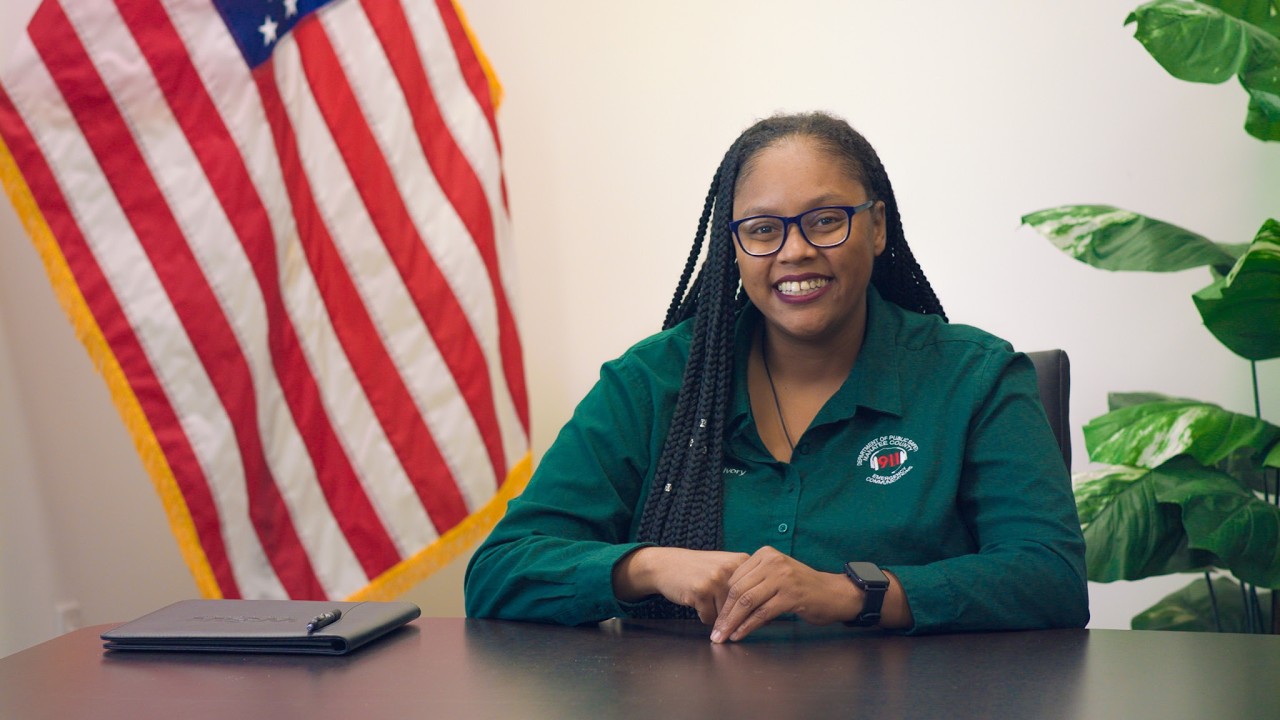
Behind the call floor sits a 10-person admin team. Katrina, an administrative specialist, is also the center’s records custodian. She pulls 911 audio and CAD reports, redacts them, and sends them to members of the public, law firms, deputies and the state attorney’s office.
Play Video
The challenge: Redacting by ear meant every call taking 30 minutes to redact
Requests for 911 audio arrive almost daily. Katrina handles about 30 a month from the public alone, and law enforcement requests come on top of that.
Each call has to be cleared of anything that could identify the people on it. That means names, addresses, dates of birth, driver’s license numbers and Social Security numbers when they come up. Florida Statute 365.171 makes information in a 911 recording that could identify a caller confidential and exempt from public release.
The old audio redaction software made that work slow in three ways:
- About 30 minutes per call. Staff listened through each recording several times to catch every piece of personal information.
- One mistake meant starting over. If a name slipped through or a redaction didn’t fully cover a word, the file had to be redacted again from the beginning.
- Half the workday gone. Each admin staffer works an eight-hour day, and at least four of those hours went to new requests and secondary review.
The toll manual 911 audio redaction took on the staff
Florida’s Public Records Act (Chapter 119) requires agencies to acknowledge requests promptly and respond in good faith within a reasonable time. The ECC holds itself to a tight turnaround, so redaction sat at the top of Katrina’s list every day. Even so, some requests took a couple of weeks from start to finish.
The heavier cost fell on the staff. 911 audio is some of the hardest material a public employee has to listen to.
“No one calls 911 because they want to. They do it because they need our services.”
Replaying those calls again and again to catch every detail meant hearing the worst moments of someone’s life on repeat. Katrina says the stress stayed with the team for a long time and pulled attention away from their other work, including quality assurance and law enforcement requests. Nobody faced penalties, but the pressure was constant.
The solution: Why Manatee County ECC chose CaseGuard AI
The team went looking for software that would clear the backlog and take pressure off the admin staff. CaseGuard came up in their search. They ran a trial, heard from other agencies using it, and went through training with the CaseGuard team.
A few things made the decision for them:
- The trial showed the software was easy enough for staff to pick up quickly.
- Katrina can work directly on the laptop where it’s installed or remote in from her office.
- It connects to the county’s own server, so recordings stay under county control.
“CaseGuard was one of our top picks, which is why we chose to go with it,” Katrina says. “And we have never looked back.”
CaseGuard was up and running on the county’s own server
Security came first. The ECC connected CaseGuard to its own server, so the 911 recordings being redacted never leave the county’s environment. It was the center’s first time using AI for redaction, and Katrina says there hasn’t been a breach or a single worry about personal information getting out since.
With that settled, Katrina set the software up around the way she works. She saved her preferred settings as a template, so nothing needs re configuring when she logs in. Uploading a call and getting a full transcript back now takes a few clicks and a few seconds.
Replaying calls to auto-transcribing & redacting: What actually changed
1. Finding what to redact
Before CaseGuard: Listen to each call several times and catch every name, address and number by ear.
With CaseGuard: The call is transcribed automatically. Katrina reads the transcript alongside the audio, which makes names and addresses easier to spot and confirm.
2. Fixing a missed redaction
Before CaseGuard: Go back to the file and redact it again from the start.
With CaseGuard: Jump to the section that was missed, redact it and save.
3. Listening time
Before CaseGuard: Multiple passes through every call.
With CaseGuard: Once, or twice at most. The accurately generated transcript saved most of the time.
4. Delivery
Before CaseGuard: Sometimes a couple of weeks from request to release.
With CaseGuard: Often the same day or the next, including secondary review and approval.
The results: Releasing requests the same day
- Audio redaction time per call: What used to take at least 30 minutes now takes 5-10 minutes. That’s up to 83% faster
- Request turnaround: A couple of weeks down to same day or next day.
- Portal backlog: Around 10 open cases at a time down to about one a day.
- Listens per call: Several passes down to one or two.
- Monthly volume: About 30 public requests a month handled without a queue building up
The bus crash test
In October 2025, an SUV crashed into three stopped school buses on State Road 70 in Manatee County. The buses were carrying 90 students and six adults from Fort Pierce Central High School, and a 2-year-old in the SUV was critically injured.
Katrina and a colleague knew the calls would draw attention. As soon as they heard about the crash, they pulled the five or six related 911 calls, redacted them with CaseGuard’s audio redaction tools and had them approved before the requests arrived. The files went out to the parties who needed them, including law enforcement agencies that responded to the scene.
With the old software, Katrina estimates that same batch would have taken days.
What changed for the people doing the redaction work
- Less exposure to traumatic audio. Fewer replays per call means less of the repeated listening that contributes to PTSD among 911 staff.
- Time back for other work. Hours that used to go to redaction now go to state attorney and law enforcement requests, which can run long.
- A lighter load for the team. Katrina has taken on most of the redaction herself, and her colleague has been able to step back from it.
- Happier requestors. People waiting on records for court cases, medical claims or business needs get them faster. Katrina says many of them are grateful.
- The work feels good again. Katrina now enjoys redaction, which she says wasn’t true before because of the stress.
Using AI Redaction on 911 Audio for the First Time, in Katrina’s Words
On speed:
“Because of CaseGuard, we’ve been able to fulfill more public requests in a timely manner than we have in the past.”
On fixing mistakes:
“If something’s missed on the first try, we can go back, identify what was missed and redact it immediately. That saves a lot of time.”
On the balance every records custodian has to strike:
“These are some of the worst moments in everybody’s life. Being able to protect the identities and personal information of those people is extremely crucial, while still presenting the facts of what happened as transparently as possible.”
On the day-to-day:
“I do enjoy getting people the things that they need in a timely manner. With redactions, I’m able to immediately and directly help the people that are in need.”
The Manatee County ECC is now looking at video redaction and plans to bring CaseGuard into that work as well.
Still redacting 911 calls by ear?
Every records request at a 911 center starts with someone pressing play on a real emergency. A crash on the highway, a house fire, a parent trying to keep their voice steady while help is on the way. Telecommunicators hear those calls once, live. When the only way to catch a name is to hear the call again, your records staff end up living those moments three and four times over, week after week. That weight builds slowly, and in a lot of centers it quietly gets treated as part of the job.
CaseGuard AI is built to take as much of it off your team as possible:
- Read along instead of replaying. Automatic transcription puts every word on the page, so names, addresses and numbers are easy to find and confirm.
- Fix a miss in seconds. Jump to the moment that was missed, redact it and save, without starting the file over.
- Save your settings. Saved templates take each new call from upload to transcript in a few clicks.
- Keep your data in-house. Run it on your own servers so recordings never leave your environment.
- Handle every format in one place. Audio, video, images and documents are redacted in the same platform, ready for the day body cam or CCTV requests land on your desk.
Your team already carries the hardest calls in your county. Book a demo today, and we’ll show you how much of that load CaseGuard AI can take off their desks.